

Short answer
An error coin is a coin with an unusual feature that may have happened during preparation, striking, or finishing at the mint. Scratches, dents, discoloration, machine marks, and damage from circulation can look dramatic but are not mint errors. The first useful step is not to search for a price; it is to record the feature and test whether it fits a known minting process.
Use this guide to inspect both sides and the edge, take a glare-free photo, compare the feature with a trusted reference, and keep the conclusion appropriately cautious. Coin Identifier can help organize visible clues, but a photo-based result cannot certify an error, authenticity, grade, rarity, or market value.
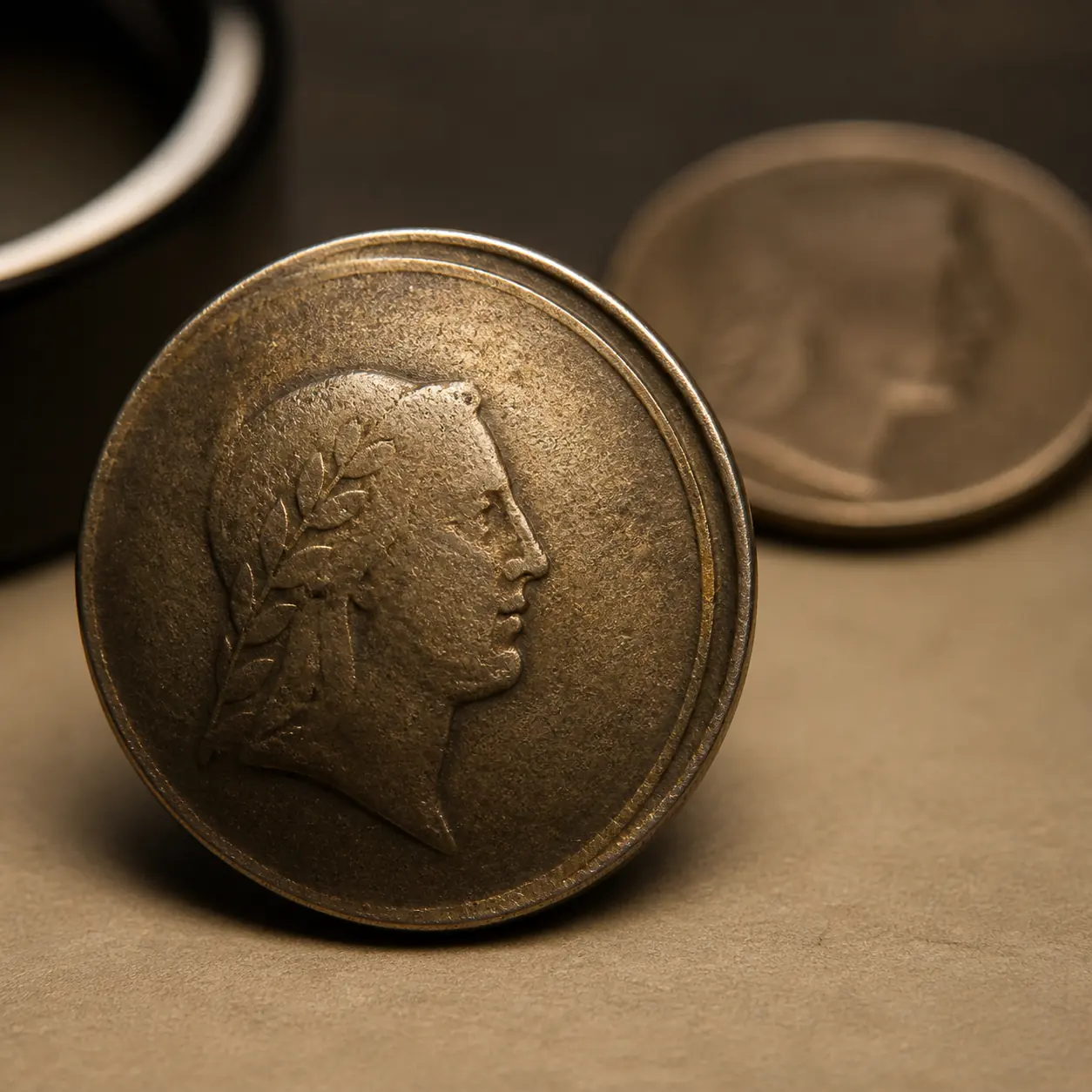
1. What counts as a possible mint error?
A possible mint error has a feature that makes sense as a manufacturing problem rather than a random mark acquired later. Examples can include an off-center strike, a clipped planchet, a broad strike, a doubled design caused during the die or hub process, a die crack, or a mismatch between the intended dies. The exact terminology depends on the mint, series, and reference catalog.
The word possible matters. A visual oddity can be real and still be a variety, a die state, a plating issue, a normal design detail, or post-mint damage. Start by describing what is visible without naming it: the rim is missing on one side, the design repeats along one edge, a raised line crosses the portrait, or the surface has a gouge. This keeps the first observation separate from the diagnosis.
Clues that deserve a closer look
The following features do not prove an error, but they are useful reasons to compare the coin with a reference and examine the edge.
- A noticeably incomplete or displaced rim that affects the whole strike
- A repeated design element with a consistent raised shape, not a random scratch
- A planchet edge or thickness that looks unlike ordinary examples of the same series
- A raised crack-like line that follows a plausible die path across multiple design areas
- A missing or mismatched design feature that is documented for the specific date and series
2. How to tell an error from post-mint damage
Post-mint damage usually happens after striking: a coin may be scratched by another object, struck by machinery, bent, polished, chemically altered, or hit on its edge. Damage can create a line, flatten a rim, or make a design look doubled. The key question is whether the feature is integrated into the strike and appears consistently across the coin, or whether it interrupts the surface like a later event.
A raised feature and an incuse feature are not automatically different diagnoses, but the distinction helps. A gouge often removes metal and leaves a sharp channel, while a die crack may appear as a raised line that blends into the struck design. A flattened rim may reflect a genuine striking problem, or it may be a contact mark. Compare the opposite side, the edge, and an ordinary example before reaching a conclusion.
Questions to ask before calling it an error
Write the answers down so a later comparison does not rely on memory.
- Does the feature have a uniform direction, height, or shape across the affected area?
- Does it continue through the design in a way a later scratch or hit could not easily create?
- Is metal displaced around a mark, or has the surface simply been removed?
- Does the edge show a matching change in thickness, rim, reeds, or lettering?
- Can you find the same feature on a documented example from the same date and mint?
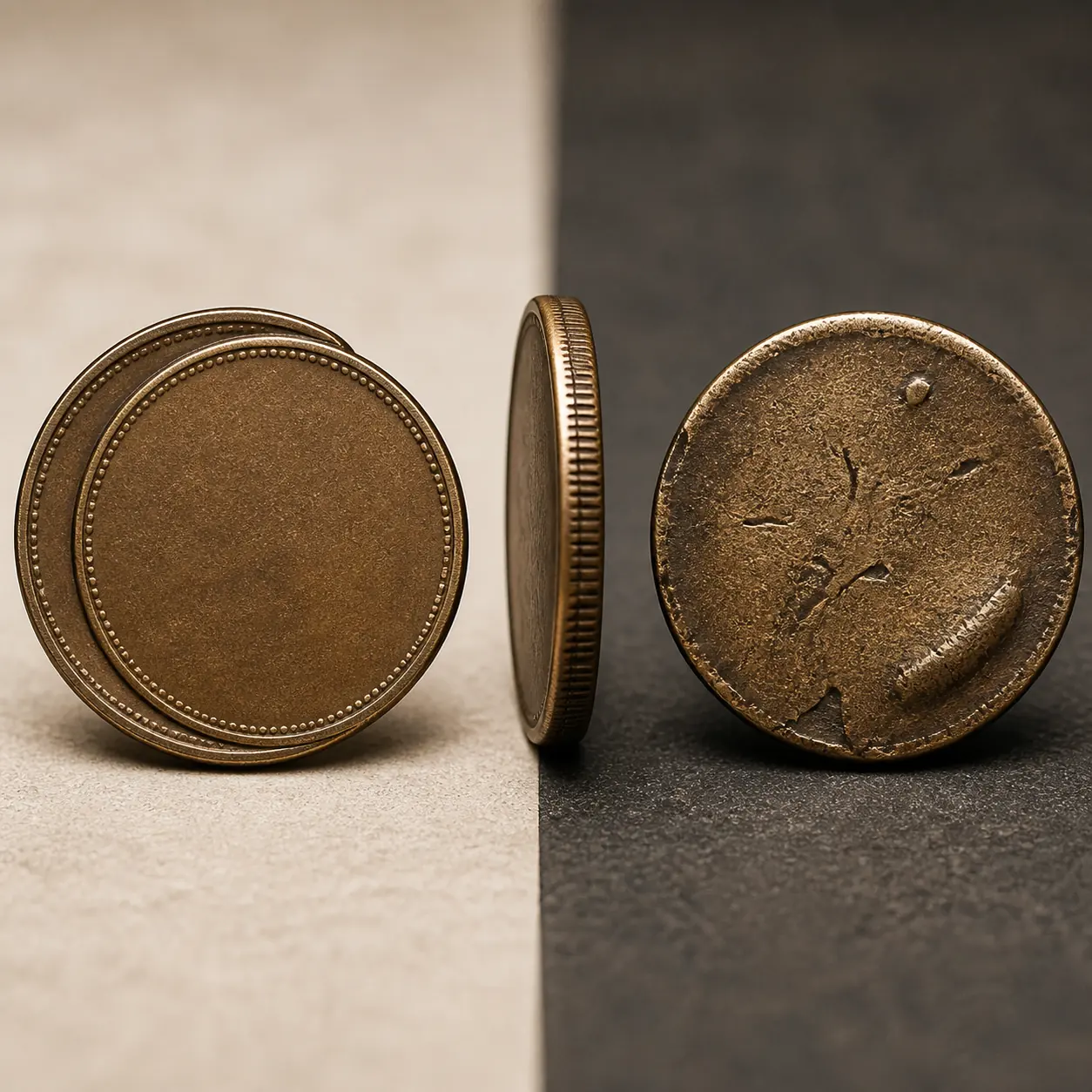
3. Take photos that preserve the evidence
A useful error-coin photo is a record, not a dramatic close-up. Place the coin on a clean, soft surface, keep the phone parallel to the face, and use diffuse light from the side or through a white diffuser. Avoid a bright flash hotspot across the date, rim, or suspected feature. Include the complete coin first, then take closer images of the feature, the opposite side, and the edge.
Keep the original files and do not clean, polish, scratch-test, or apply a filter before photographing the coin. Those actions can remove surface evidence and change the question you are trying to answer. If the coin is in a holder, change the angle to reduce reflections; do not remove it solely for a better photo when handling could cause damage.
- Show the full rim and enough background to judge whether the coin is off-center.
- Use one straight-on photo for design alignment and one angled photo for raised or recessed features.
- Photograph both sides and the edge, especially when the feature affects thickness or reeds.
- Include a ruler only for scale; do not use it to press, scrape, or test the coin.

4. Compare and verify a candidate error
After you record the feature, identify the ordinary coin first: country or region, denomination, date, mint mark, composition or color, and series. Then compare the unusual feature with a specialized reference for that series. Look for the same location, direction, shape, and effect on the rim or design. A generic search for ‘rare error coin’ is less useful than a specific search built from the evidence you can read.
Use established references such as PCGS CoinFacts, NGC Coin Explorer, official mint education pages, or a specialist error reference as starting points. A reference image can show what a known variety looks like, but a similar-looking mark is not proof that your coin matches it. For a high-value question, preserve the coin and obtain an in-person opinion from a qualified numismatist, dealer, or grading service.
A practical comparison record
Keep one row for your coin and one for the documented candidate so differences remain visible.
- Date, mint mark, denomination, and country or issuing authority
- Which side shows the feature and where it sits relative to the rim or lettering
- Whether the feature is raised, recessed, flattened, displaced, or missing
- Whether the edge, thickness, weight, or diameter agrees when safely measured
- The exact reference page or catalog description used for the comparison
5. Decide what to do next without jumping to a price
Identification and value are separate questions. Even when a coin appears to match a known mint error, its price can depend on authenticity, grade, preservation, rarity, demand, and current market evidence. Online photos can help you decide which reference to open next, but they cannot prove metal content, exact grade, or a genuine error variety on their own.
If the feature remains uncertain, take a better second photo or ask a specialist a focused question: ‘Is this raised line consistent with a die crack on this series, or does it look like post-mint damage?’ Include the date, mint mark, both sides, edge, close-up, and what you already compared. Do not advertise or sell the coin as a certified error based only on an app result.
- Keep the original coin and original photos together with your observation notes.
- Use a likely identification to narrow research, not to guarantee rarity or price.
- Avoid cleaning, chemical tests, magnets, scratches, or heat as informal experiments.
- Escalate inherited, valuable, suspected counterfeit, or sale-related pieces to a qualified professional.
Possible mint error or later damage?
Use this table as a first sorting aid. It is not a diagnosis, and the same visual symptom can have more than one cause.
| What you see | What to record | Why it matters | Do not assume |
|---|---|---|---|
| Off-center strike | How much of the rim and design is displaced | Affects the whole strike and can be compared with known examples | Every uneven rim is a mint error |
| Raised line | Path, height, and whether it crosses design details | May fit a die crack or another struck feature | Every raised line is a die crack |
| Deep scratch or gouge | Direction, sharpness, and displaced metal | Often points to contact after striking | A dramatic mark is rare |
| Flattened rim | Location, edge shape, and signs of impact | Can distinguish a strike issue from a later hit | A flat edge proves a broad strike |
| Doubled-looking design | Exact letters, date, or device that repeats | Needs a series-specific reference comparison | Blur, glare, and wear can imitate doubling |
FAQ
Error coin questions
How can I tell if I have an error coin?
Start by photographing both sides and the edge, describing the unusual feature without naming it, and identifying the ordinary date, denomination, mint mark, and series. Then compare the feature with a trusted reference. A visual oddity alone does not prove a mint error.
What do error coins look like?
Possible mint errors can show unusual strike alignment, a clipped planchet, a broad strike, a documented doubled design, a die crack, or a mismatched die feature. They can also look ordinary from one angle, so the full rim, reverse, edge, and series context matter.
How do I tell a mint error from damage?
Ask whether the feature appears integrated with the strike and follows a consistent shape, or whether it interrupts the surface like a later scratch, dent, polish, or machine mark. Compare the edge and a normal example from the same series, and keep the conclusion cautious until a reference supports it.
Can a coin identifier confirm an error coin?
No. A photo identifier can organize visible clues and suggest what to research next, but it cannot certify a mint error, authenticity, exact grade, metal content, or market value. Use the result as a starting point for reference comparison or professional review.
Should I clean a possible error coin before taking photos?
No. Cleaning, polishing, chemical tests, scratching, or heat can damage the surface and remove evidence. Use gentle handling, soft even light, and a clean background instead.
Are error coins automatically valuable?
No. A genuine error may have collector interest, but value depends on the exact error, authenticity, grade, rarity, demand, and current market evidence. Do not assume a price from a photo, a social post, or a similar-looking listing.
Reference points
Where to verify coin terminology and examples
These sources can help with series context and terminology. They are reference points, not endorsements or guarantees that a pictured coin is an error.
- PCGS CoinFactsSearchable United States coin references with series, variety, and identification information.
- NGC Coin ExplorerIssue and design information for comparing United States coin series and dates.
- United States Mint: How Coins Are MadeOfficial background on the stages of coin production that helps explain why process clues matter.
Final checklist
Inspect the process before you inspect the price
A careful error coin check is a small evidence process: identify the ordinary coin, photograph the complete piece, describe the unusual feature, compare the rim and edge, and find a series-specific reference. Separate possible mint errors from damage that happened after striking, and keep uncertainty visible when the evidence is incomplete.
When you are ready, use Coin Identifier as a browser-based visual starting point. Keep the likely match beside your photos and notes, then move to a trusted catalog or qualified professional when authenticity, condition, rarity, or value matters.