

The short answer
The most reliable way to identify a coin is to combine several visible clues instead of searching from a single symbol. Look at both sides, write down every readable word or number, note the shape and edge, and then compare the combination with a trusted coin reference. A photo identifier can help you organize the first guess, but the result should remain a starting point until the physical coin and a reference source agree.
If the coin is worn, foreign, or partly hidden by glare, do not force a confident answer. Record what is missing, take a clearer photo, and keep alternative matches in view. Identification tells you what the object may be; it does not by itself prove authenticity, grade, rarity, metal content, error status, or market value.
1. Start with the visible clues on both sides
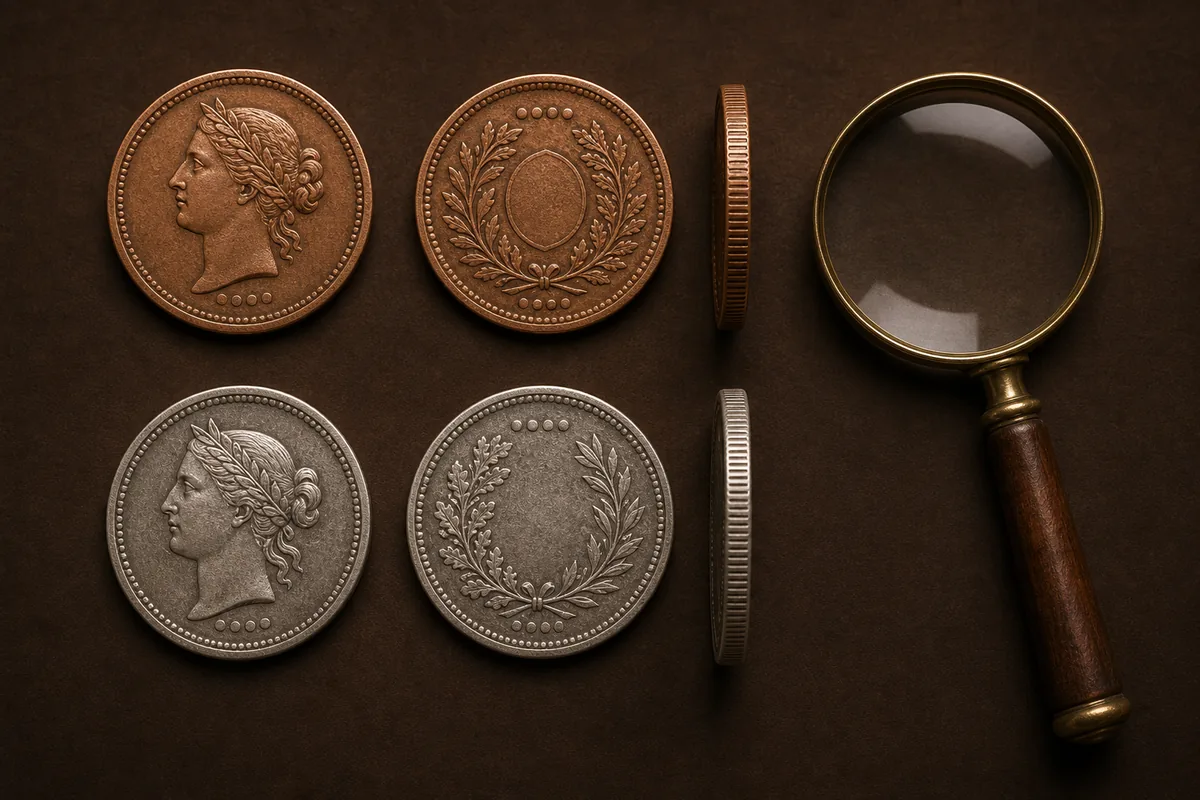
Place the coin on a clean, soft surface and inspect the obverse, reverse, and edge. The obverse is often the portrait or principal design side; the reverse may carry the denomination, emblem, date, or a second language. Do not assume that the larger portrait is enough. Many countries reuse portraits, wreaths, animals, buildings, and symbols across different denominations and years.
Make a short evidence note before you search. Write the exact letters you can read, even if they are incomplete, and mark uncertain characters with a question mark. Note whether the lettering follows the rim, whether the date is four digits or a smaller mark, and whether the coin is one color or made from two visible metals. These small observations narrow the field more effectively than a broad search for an old coin.
A useful first-pass checklist
Work from the outside toward the center so you do not miss a rim or edge clue.
- Country, territory, language, script, or currency symbol
- Denomination, unit, and whether the coin is circulating or commemorative
- Date, date format, and any small mark beside or below it
- Portrait, animal, building, plant, emblem, or repeating geometric design
- Edge shape: plain, reeded, lettered, segmented, or visibly patterned
2. Read the date, denomination, and mint-mark area
The date and denomination usually do more identification work than color. A copper-looking surface can come from age, lighting, cleaning, or surface change, while the same denomination may exist in several metals or designs. If the date is unclear, note the number of visible digits and compare the surrounding typeface, portrait, and reverse layout rather than guessing a year.
A mint mark is a small letter or symbol that can identify where a coin was struck. Its position varies by country and series, and some coins have no mint mark at all. Record the location—under a portrait, near a date, beside a design, or on the reverse—without assuming that every small dot or scratch is a mint mark. A magnifying glass or a close, evenly lit photo can help, but it cannot restore details that wear has removed.
For foreign coins, the denomination may not use familiar numerals or spelling. Look for a number, a word that repeats around the rim, a national emblem, a monarch or leader, and the direction of the script. Search the combination of clues, not just the word coin.
- Record the date exactly as seen; do not silently convert a calendar or date format.
- Separate a denomination from a date, catalog number, decorative star, or serial-like mark.
- Describe a possible mint mark as a location and shape, then verify it in a reference catalog.
- If the coin is two-toned, note whether the center and ring appear intentionally different.
3. Take a photo that preserves identification evidence
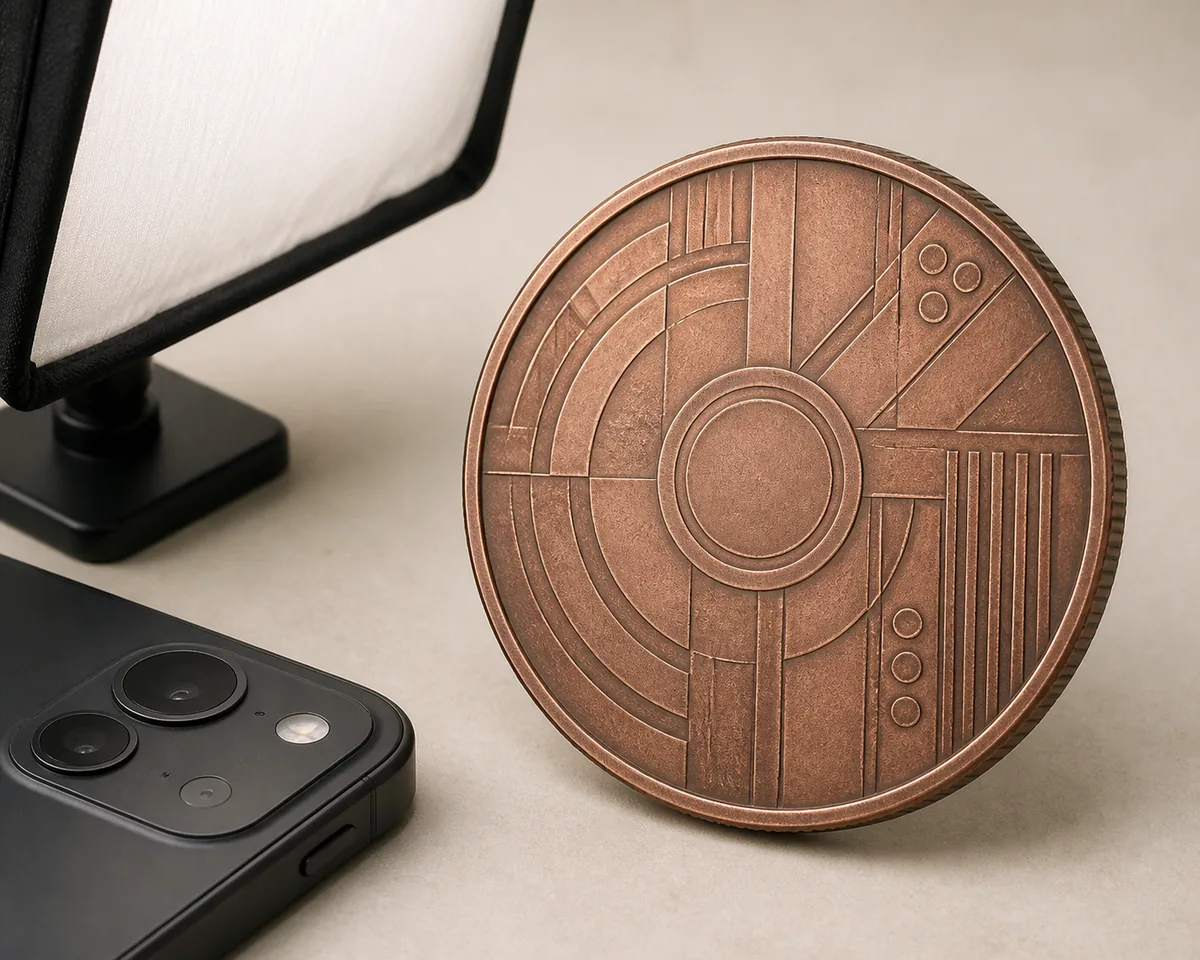
A good coin photo is not necessarily artistic; it is readable. Fill most of the frame without cropping the rim, keep the phone parallel to the coin, and use diffuse light from more than one direction. Bright reflections can erase lettering and make a worn surface look like a different metal. Turn off the flash when it creates a hard hotspot, or place a thin white surface between the light and the coin.
Photograph the clearest side first, then take the opposite side and the edge if they contain additional information. Keep the original files so you can return to them after a result suggests a likely match. If a protective holder creates reflections, change the angle or photograph the coin outside the holder only when you can do so safely and without touching or cleaning the surface.
When you use an online coin identifier, treat the output as a visual research aid. Upload one clear image, read the likely match and visible details, then compare the result with your own notes. If the result is uncertain, a better second photo is usually more useful than repeating the same blurry image.
- Avoid glare across the date, lettering, portrait, and denomination.
- Keep the whole rim visible and include a separate edge photo when the edge is distinctive.
- Use a plain background and do not add filters that change the apparent color.
- Never clean or polish a potentially collectible coin just to make the photo brighter.
4. Handle old, worn, and foreign coins carefully
Old or heavily circulated coins often lose the very details that separate similar issues. Start with the broadest reliable clues: script, portrait direction, denomination shape, approximate diameter, and the reverse layout. If the date is only partly visible, record the visible digits and the position of the missing area. Several plausible matches are more honest than one precise-looking guess based on a single worn mark.
Foreign coins add a language and calendar problem. A word may be a country name, a denomination, a motto, or a date written in a different numeral system. Look for a country emblem, a map, a ruler, a coat of arms, or a repeated national script. If you can identify the language family but not the country, use that as a filter and compare the full design in a world-coin catalog.
Do not use a chemical test, magnet, scratch test, or aggressive cleaning as a first identification step. Those actions can damage a surface or create a misleading clue. For an inherited collection, a coin with an uncertain identity, unusual error, or suspected precious-metal content deserves careful handling and a professional opinion before any sale or alteration.
What to do when the first guess is weak
Write down the missing evidence and make the next check targeted instead of adding random search terms.
- Photograph the reverse and edge separately.
- Compare the layout of stars, wreaths, animals, or lettering—not just the portrait.
- Search a partial inscription together with the visible denomination or country clue.
- Keep two or three candidate matches until a date, mint mark, or edge detail separates them.
5. Verify a likely match with a trusted reference
Once you have a likely name, verify the complete design in an authoritative catalog. Check the obverse and reverse together, the date position, denomination, edge, diameter or weight when known, and the mint-mark location. A matching portrait alone is not enough. The reference should explain which varieties exist and what details distinguish them.
PCGS CoinFacts, NGC Coin Explorer, and official mint education pages can be useful starting points, but a link to a reference is not the same as an endorsement or a professional authentication. Read the identification notes, compare the physical coin, and keep the source and catalog description with your collection record.
Identification and value are separate questions. Market value can depend on authenticity, grade, rarity, variety, provenance, demand, and current comparable sales. A photo-based result cannot prove those points. If the decision affects a high-value purchase, inheritance, insurance, sale, or suspected counterfeit, ask a qualified numismatist, dealer, or grading service for an in-person assessment.
- Does the candidate reference show the same front and reverse design?
- Does the date format and mint-mark position match?
- Does the edge or two-tone construction agree with the reference?
- Are you keeping identification, condition, authenticity, and value as separate conclusions?
Which clue should you trust first?
Use the clues together. Their usefulness changes with the coin, but the combinations below are a practical way to decide what to record next.
| Clue | Record | Why it helps | Common mistake |
|---|---|---|---|
| Date | Digits, format, and position | Separates otherwise similar designs | Guessing a missing digit from color or wear |
| Denomination | Number, word, and unit | Narrows the country and series | Confusing a catalog number with face value |
| Mint mark | Shape and exact location | Can separate issues from different mints | Treating a scratch or dot as a mint mark |
| Edge | Plain, reeded, lettered, or segmented | Adds a second angle of evidence | Ignoring the edge because the front looks clear |
| Design | Portrait, reverse, emblem, and layout | Helps compare full references | Matching only a familiar portrait |
FAQ
Coin identification questions
Can I identify a coin from a photo?
Often you can reach a useful likely match when the photo shows the whole coin, readable lettering, the date or denomination, and enough of the reverse or edge. A photo is less reliable when the coin is blurred, cropped, reflective, worn, or shown from only one side. Treat the result as a research starting point and verify it with a reference.
What is the most important coin identification clue?
There is no single universal clue. The strongest starting combination is usually the denomination or unit, date, country or script, and the full design on both sides. A mint mark or distinctive edge can separate two otherwise similar candidates. Record several clues instead of relying on color or a familiar portrait.
Can a coin identifier tell me how much my coin is worth?
It can help you identify what to research, but a photo-based identification is not a professional valuation. Price depends on authenticity, grade, rarity, variety, provenance, demand, and current market evidence. Confirm the identity first, then use an authoritative catalog or qualified professional for a value question.
How do I identify an old or foreign coin?
Start with the script, country clues, denomination shape, date format, portrait or emblem, reverse layout, and edge. Record partial lettering rather than guessing it. Take separate photos of both sides and the edge, keep several possible matches, and compare the complete design in a world-coin reference.
Should I clean a coin before taking a photo?
No. Cleaning or polishing can damage the surface and remove evidence that matters to collectors. Use gentle handling, soft even light, and a clean background instead. If the coin is valuable or inherited, avoid experiments and ask a professional how to handle it.
Do I need both sides of the coin?
Both sides are strongly preferred because the reverse often carries the denomination, date, emblem, or series detail that separates similar coins. If you only have one clear side, submit it as a first pass and then photograph the opposite side or edge when the likely match remains uncertain.
Reference points
Where to verify a likely match
These references are useful for checking terminology, design details, and catalog context. They are not presented as partners or endorsements of Coin Identifier.
- PCGS CoinFactsA searchable reference for many United States coin series, varieties, and identification details.
- NGC Coin ExplorerA reference catalog with United States coin descriptions and issue information.
- United States Mint: Parts of a CoinAn official educational explanation of common coin features and terminology.
Final checklist
Identify first, verify second, value separately
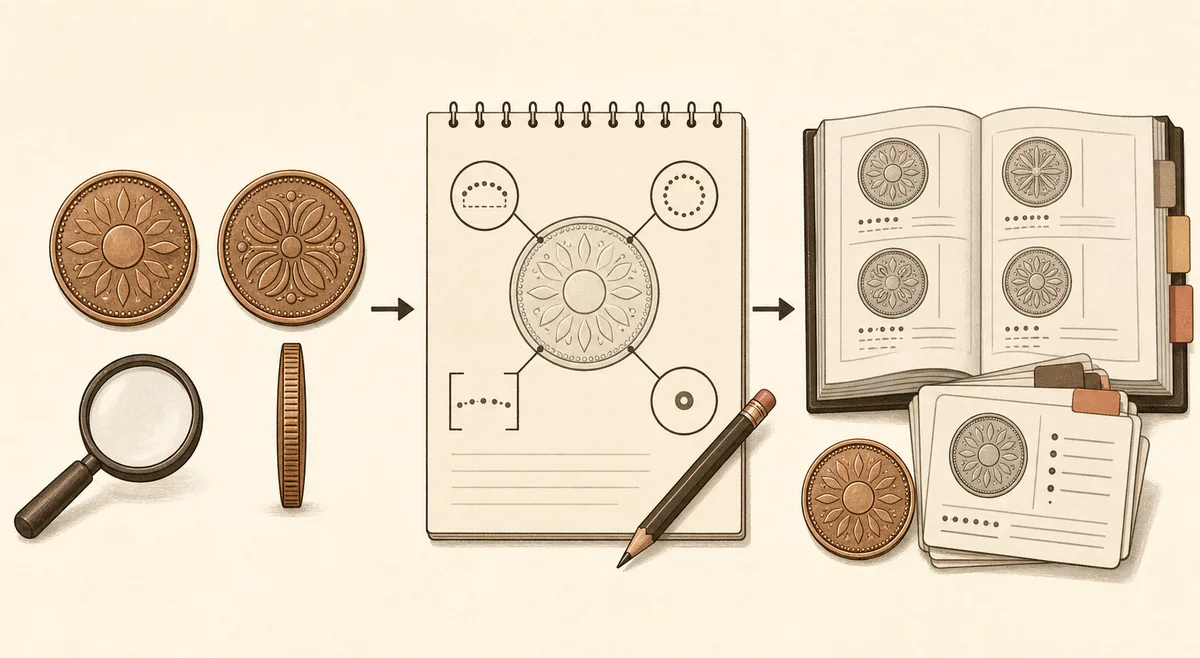
A careful coin identification is a small research process: inspect both sides and the edge, record the visible clues, take a glare-free photo, compare more than one candidate, and verify the full design in a trusted reference. This approach works better for ordinary circulation coins, old coins, foreign coins, and worn pieces because it makes uncertainty visible instead of hiding it.
When you are ready, use the Coin Identifier as a browser-based first step. Keep the output beside your own notes, and move to a professional or specialist reference when authenticity, condition, rarity, or value matters.