

The short answer
The coin grading scale is a shared language for describing a coin's condition, preservation, and sometimes the quality of its strike. The modern Sheldon scale runs from 1 to 70: low numbers describe heavily worn pieces, while high numbers describe coins with little or no visible wear. Letter codes such as G, VG, F, VF, AU, and MS add context to the number. The scale helps collectors compare like with like, but it does not turn a photograph into an authentication, appraisal, or guaranteed price.
For a useful first pass, identify the coin before you grade it. Confirm the country or issuing authority, denomination, date, mint mark, and series, then inspect both sides and the edge under soft light. Look for wear on the highest design points, remaining luster, marks in the fields, strike quality, and any cleaning or damage. Keep your result as an honest range until a reference or qualified grader supports a more precise conclusion.
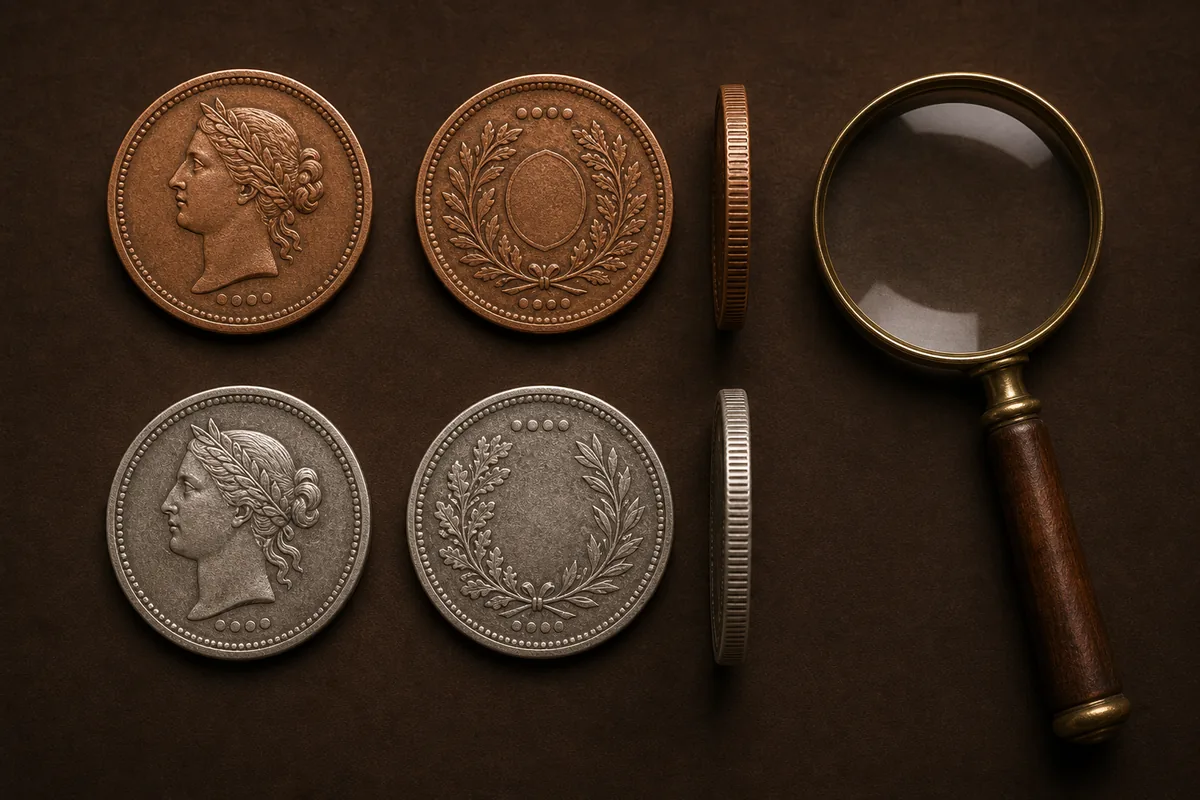
1. What the coin grading scale actually measures
A coin grade is an assessment of condition, not a statement of identity or price. Graders look at how much the design has worn, how the surfaces reflect light, whether the coin was struck sharply, and whether later marks or cleaning changed the appearance. A grade is meaningful only when the series and issue are known. The same amount of wear can look different on a soft-relief commemorative coin and on a sharply detailed modern issue.
The coin grading scale also separates normal circulation from problems that affect how a coin is described. Scratches, harsh cleaning, corrosion, environmental damage, altered dates, and residues can lead to a details or problem description instead of a normal numeric grade. That distinction matters because a bright surface is not automatically a high-grade surface. Luster can be original, artificial, or simply a reflection from a lamp or phone flash.
Think of the scale as a comparison tool. It lets a collector say that two examples are both Very Fine, or that one is an About Uncirculated example and the other is Mint State, without pretending that the label captures every nuance. A professional report may add strike, color, surface, or variety designations, but those additions do not remove the need to inspect the complete coin.
Identity comes before condition
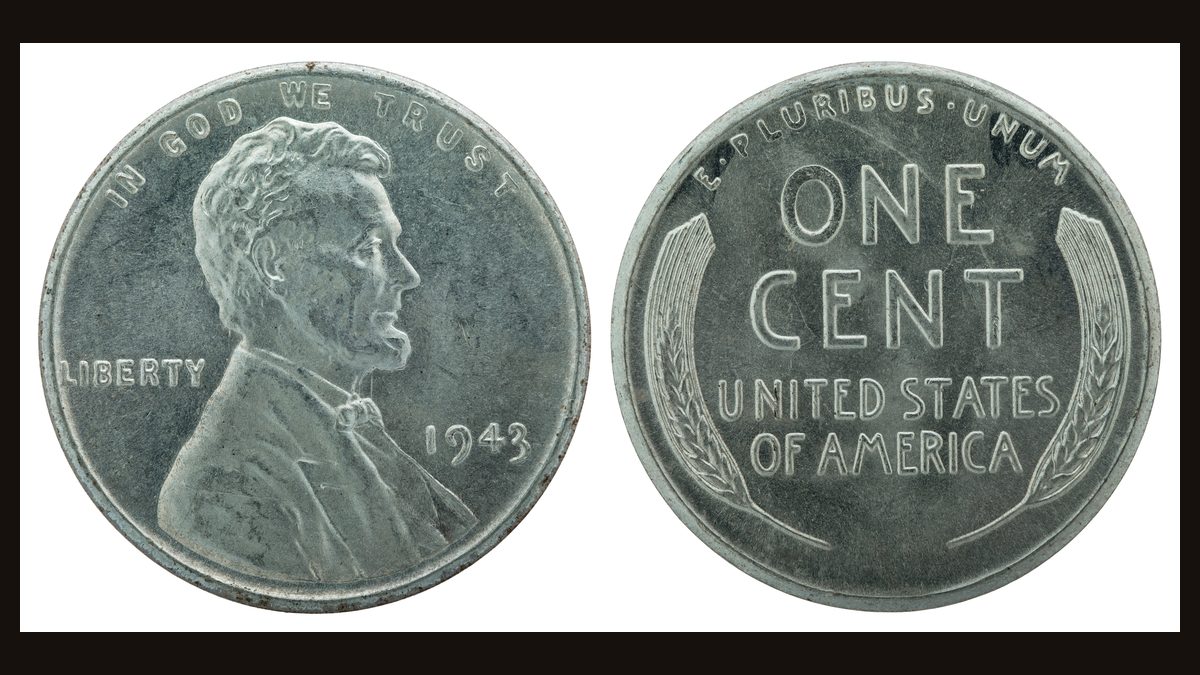
Write down the exact series, date, mint mark, and denomination before choosing a grade. A worn 1943 cent and a worn 1944 cent can share a broad grade while having very different reference entries, varieties, and market context.
- Confirm the front and reverse design together.
- Record the mint-mark location instead of guessing a tiny mark.
- Keep authenticity, variety, grade, and value as separate questions.
2. Sheldon 1–70: the main coin grade bands
The Sheldon scale assigns a number from 1 through 70. The number is not a percentage and it does not mean that a coin is 65 percent perfect. It is a standardized shorthand that developed from earlier adjectival descriptions. The bands below are practical reading guides, not a replacement for the official standards of a grading service or a specialist reference for a particular series.
At the lower end, Poor, Fair, and About Good pieces have heavy wear and may have missing lettering or major design details. Good and Very Good examples retain more of the main design but still show broad circulation wear. Fine and Very Fine coins preserve more lettering, hair, leaves, feathers, or architectural lines. Extremely Fine pieces have sharper detail but visible wear on the highest points.
About Uncirculated, often written AU, describes a coin with only a small amount of wear. Mint State, written MS, is used for circulation strikes that show no wear from circulation; the number after MS describes the quality of the surfaces and strike within that range. Proof, commonly PF or PR, describes a special manufacturing method for collectors, so a proof grade is not simply a higher version of an ordinary circulation grade.
A compact reading table
Use this table to translate common labels into a first observation. Exact thresholds vary by series, and borderline coins often need side-by-side reference images.
- P-1 to AG-3: identifiable but heavily worn; important details may be missing.
- G-4 to VG-8: major design elements remain, with broad wear across the highest relief.
- F-12 to VF-35: moderate to light wear; lettering and smaller design lines become clearer.
- XF-40 to AU-58: most detail remains, with wear concentrated on the highest points.
- MS-60 to MS-70: no circulation wear on a circulation strike; marks, luster, and strike separate the numbers.
- PF/PR: proof production designation; inspect mirrored fields, frost, hairlines, and handling marks.
3. How to read G-4, VF-30, and MS-65
A label such as VF-30 has two parts. VF is the adjectival band, and 30 is the numeric point inside that band. G-4 means Good at numeric 4, while MS-65 means Mint State at numeric 65. These labels are useful because they preserve both a broad description and a more granular position. They are not school marks, percentages, or a promise that every service will assign the same number.
The number becomes more sensitive as a coin moves toward the top of a band. A circulated coin may be easy to place between Fine and Very Fine when the date and lettering are clear, but separating AU-55 from AU-58 can depend on a small amount of wear, luster breaks, and the quality of the strike. Separating MS-64 from MS-65 may depend on the number, location, and visibility of contact marks under consistent magnification.
Strike and surface should be described separately in your notes. A weakly struck coin can lack detail even when it has little circulation wear. A sharply struck coin can show many later marks. Write what you see: ‘light wear on the hair and cheek, dull luster in the fields, two marks near the reverse rim.’ That observation is more useful than jumping to a confident number.
- G, VG, F, VF, and XF describe circulated condition bands.
- AU means About Uncirculated; a small amount of wear can be present.
- MS means Mint State for a circulation strike; PF or PR identifies a proof strike.
- A plus or star designation is an additional service opinion, not a new 1–70 scale.
4. A careful at-home coin grading workflow
You can make a useful preliminary observation at home without cleaning, touching the fields, or claiming a certified grade. Use a soft surface, clean hands, and diffuse light. A 5x loupe can reveal a mark, but it can also exaggerate a tiny line that is invisible at normal viewing distance. Keep the coin in its holder if removing it could damage the piece.
Start with a complete record. Photograph the obverse, reverse, and edge without cropping the rim. Note the date, mint mark, denomination, color, and any visible lettering. Then compare the highest design points with a reference image for the exact series. Look for a continuous loss of detail that follows normal wear, not just a dark patch caused by a reflection.
Next, tilt the coin slowly under one soft light. Original luster tends to move across the fields, while a dull cleaned area may look flat or show fine parallel hairlines. Do not use a magnet, scratch test, chemical dip, polish, or heat as a casual experiment. Those actions can damage the surface and can destroy the evidence you were trying to assess.
Finish by writing a range and the reason for uncertainty. For example: ‘likely VF to XF; lettering is clear, but the cheek and wheat lines need a sharper photo.’ If the grade could affect a purchase, inheritance, insurance claim, or sale, stop at the range and ask for an in-person opinion.
Five observations to record
A repeatable note makes a later comparison easier and prevents a dramatic mark from taking over the whole decision.
- Wear: which highest points are smooth or missing?
- Luster: does light move across the fields or stop in a flat patch?
- Strike: are details weak because of production, or softened by circulation?
- Marks: where are scratches, contact marks, spots, or rim bumps?
- Problems: is there evidence of cleaning, corrosion, alteration, or residue?
5. When a professional coin grading service makes sense
Professional grading is most useful when the coin is valuable enough that authenticity, a narrow grade range, a variety, or a protective holder could change a decision. A service can examine the coin under controlled conditions, compare it with standards, and disclose details or problems that a casual photo cannot establish. Submission fees, shipping, insurance, and turnaround time are part of the decision, so do not send every low-value coin automatically.
Before submitting, confirm the identity and read the service's current instructions, eligible categories, fees, and return terms. Keep your own photographs and notes. If a coin may be counterfeit, altered, or damaged, say so honestly and choose a service or specialist that explains how those pieces are handled. A holder and number do not replace your responsibility to verify the description and provenance.
Coin Identifier can help you organize a likely identity and the next photograph to take. It cannot assign a certified grade, authenticate a coin, confirm a variety, or predict a current price. Use a photo result to decide which reference or professional question comes next, then keep the grading conclusion separate from the identification result.
- Use a professional opinion when the financial or legal consequences are meaningful.
- Compare total submission cost with the likely benefit of a certified report.
- Treat ‘details’ or problem descriptions as useful condition information, not as a failure of the process.
Grade bands at a glance
These plain-language descriptions help you choose what to inspect next. They are a starting reference, not a service guarantee.
| Label | What it usually signals | What to inspect | Do not assume |
|---|---|---|---|
| G-4 | Heavy circulation wear with a recognizable design | Date, lettering, and major relief | That every faint mark is an error |
| VF-30 | Moderate detail with wear on the highest points | Hair, leaves, feathers, rims, and lettering | That a sharp photo proves authenticity |
| AU-55 | Nearly uncirculated with limited high-point wear | Luster breaks and the highest relief | That brightness means Mint State |
| MS-65 | No circulation wear with strong overall surfaces | Contact marks, strike, luster, and eye appeal | That MS-65 equals a fixed price |
| PF/PR | Proof production made for collectors | Mirrored fields, frost, hairlines, and handling | That proof is simply a higher MS grade |
FAQ
Coin grading scale questions
What is the coin grading scale?
The modern Sheldon scale is a 1–70 system used to describe a coin's condition. Lower numbers indicate heavier wear, while high Mint State or proof numbers indicate stronger preservation within the relevant category. Letter codes such as VF, AU, MS, and PF add context to the number.
What does MS-65 mean on a coin?
MS means Mint State for a circulation strike, and 65 is the numeric point. It indicates no circulation wear with a strong combination of surfaces, strike, luster, and eye appeal under the service's standards. It is not a percentage and it does not guarantee a price.
Can I grade a coin from a photo?
A clear photo can support a preliminary range when it shows both sides, the edge, the highest design points, and the surfaces under even light. It cannot reliably assign a certified grade because glare, focus, color, luster, authenticity, and hidden marks may be unresolved.
What is the difference between AU and MS?
AU means About Uncirculated and allows a small amount of wear, usually on the highest points. MS means Mint State and is used for a circulation strike with no circulation wear. A bright coin can still be AU if wear is present, and a weak strike can affect detail without proving circulation wear.
Should I clean a coin before grading it?
No. Cleaning, polishing, chemical tests, scratching, and heat can damage the surface and remove evidence. Photograph the coin as it is, handle it carefully, and ask a specialist how to proceed when the piece may be valuable.
How do I get a coin professionally graded?
First confirm the identity and read the current submission rules, fees, eligible categories, shipping requirements, and return terms of a reputable grading service. Compare the total cost with the coin's likely benefit, keep your original notes, and disclose suspected alteration or damage.
Reference points
Sources for grading terminology
These references explain the scale and standards. They are listed for research context, not as partners or endorsements of Coin Identifier.
- NGC Coin Grading ScaleA numeric 1–70 reference with strike types, designations, and an explanation of what a 70 represents.
- Sheldon Coin Grading ScaleA historical overview of the original and adapted scale, circulated grades, uncirculated grades, and proofs.
- Royal Canadian Mint: What’s the score?An accessible explanation of common grade terms and why accurate grading takes training and experience.
- American Numismatic Association Official Grading StandardsA professional reference point for official grading standards and the limits of a casual estimate.
Final checklist
Observe the condition, then state the limits
Use the coin grading scale as a shared vocabulary: identify the exact issue, read the band and number together, inspect wear, luster, strike, marks, and problems, and write down what remains uncertain. A careful range is more useful than a precise number that a reflection or a cropped photograph cannot support.
When the result matters financially, preserve the coin and seek an independent reference or qualified professional. Coin Identifier can organize the photo evidence and suggest what to check next, but the final grade, authenticity, and value belong to the appropriate reference or expert process.