

The short answer
To identify a foreign coin, record several clues together: the writing system, readable letters or numerals, country symbols, denomination, date format, portrait, reverse layout, and edge. A photo-based identifier can suggest a country or series from those signals, especially when the inscription is unfamiliar. Treat the suggestion as a research lead and compare the complete design with a world-coin catalog.
Do not begin with value. A coin may use a calendar, denomination, or script that is unfamiliar to you, and a similar portrait can appear on many issues. Photograph both sides and the edge, keep uncertain characters unresolved, and verify identity before researching rarity, metal, or price.
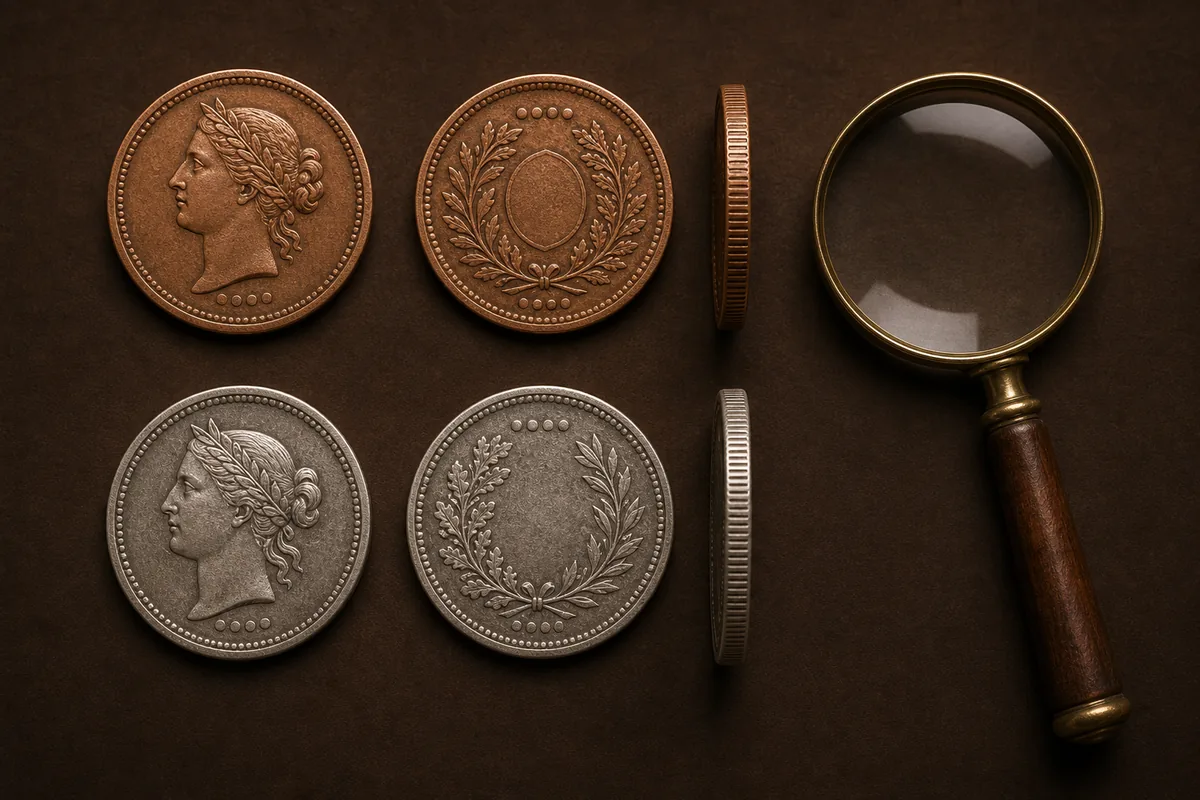
1. Start with the script and visible clues
Look at the lettering before you try to translate it. Latin letters may appear on coins from many regions, while Cyrillic, Arabic-derived scripts, Chinese characters, Japanese kana, Korean hangul, Devanagari, and Thai lettering can quickly narrow the search. Script is a regional clue, not proof of one country: a language can cross borders and a commemorative coin can carry more than one language.
Write down the shapes you can actually see. Note whether text follows the rim, whether it is read left to right or right to left, and whether a repeated word appears beside a numeral. Record a partial inscription with a question mark instead of replacing an unclear character with a confident translation. A foreign coin identifier is most useful when it preserves uncertainty for the next comparison.
A first-pass clue list
Work from broad regional evidence toward the exact issue.
- Script family, direction of writing, and any readable country or denomination word
- Numerals, symbols, currency sign, and the number of visible date digits
- Portrait, ruler, animal, building, coat of arms, map, star, wreath, or plant
- Coin shape, color, center hole, bimetal construction, and approximate size
- Plain, reeded, lettered, segmented, or otherwise distinctive edge
2. Read numerals, dates, and denominations carefully
A number on a foreign coin may be a denomination, a year, a mint code, or part of a commemorative inscription. Some countries use Western numerals alongside local scripts; others use Eastern Arabic, Thai, Devanagari, Chinese-derived, or other numeral forms. Calendar systems also differ. Islamic Hijri dates, Thai Buddhist Era dates, Japanese era names, and Taiwan's Minguo calendar can place the same physical year in a different-looking number.
Do not convert a date until you know what the number represents. Compare its position with the reverse layout, identify the denomination word or symbol, and look for a repeated year on the opposite side. A ruler portrait, national emblem, or mint mark may confirm the country before a date converter is useful.
- Record the visible number exactly and mark uncertain digits instead of guessing.
- Separate a date from a denomination, catalog number, decorative star, or mint mark.
- Note where a possible mint mark sits and compare that position with a reference entry.
- Check whether a center and outer ring are intentionally different metals or only different lighting.
3. Photograph both sides and the coin edge
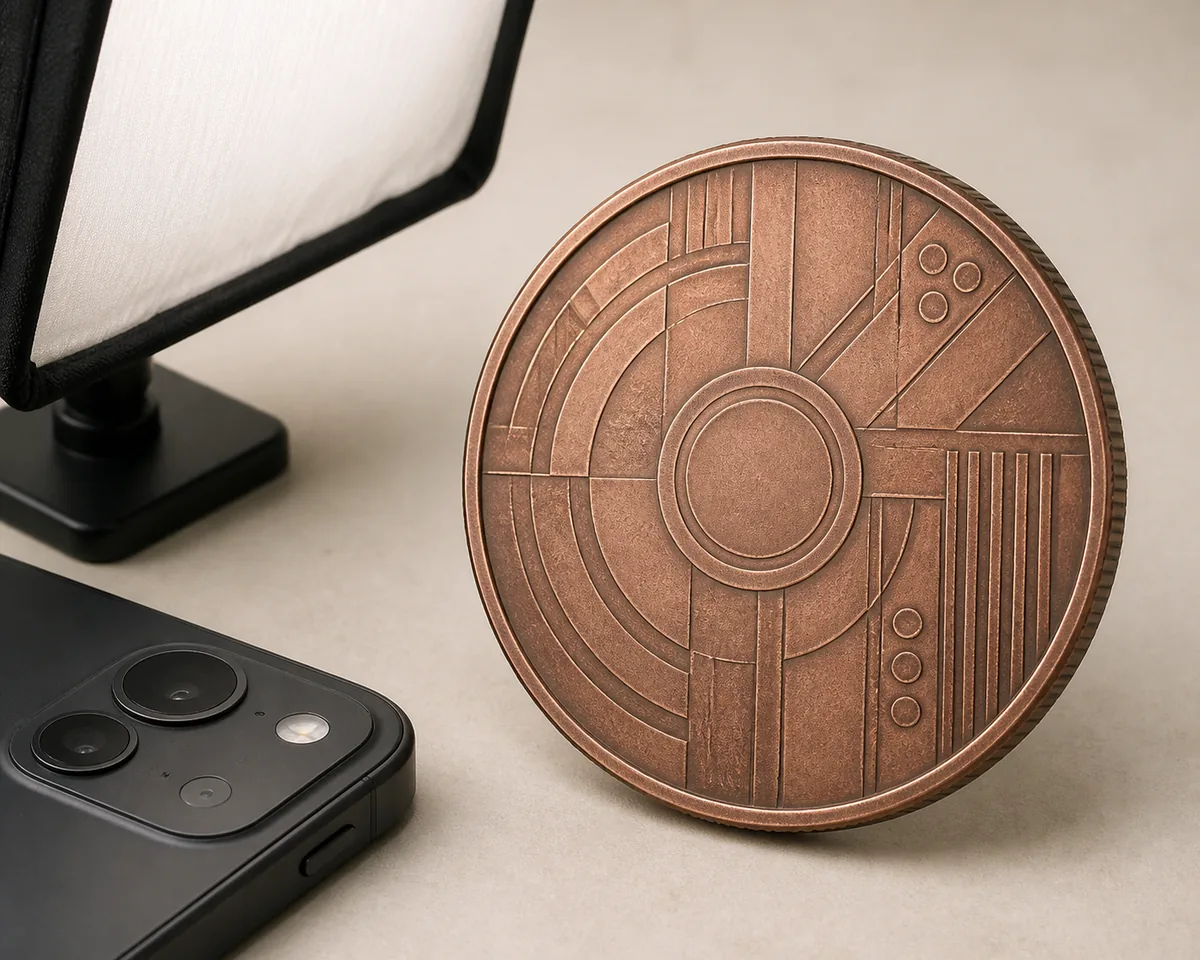
A readable photo is more valuable than a dramatic one. Place one coin on a plain, stable surface, keep the phone parallel to the face, and fill most of the frame without cutting off the rim. Use diffuse light from the side or from two directions. A hard flash reflection can erase tiny letters and make a worn silver-colored surface look copper or gold.
Take a straight-on photo of the clearest face, then photograph the reverse and edge separately. Keep the original files so you can compare a suggested match with the evidence later. If a holder creates glare, change the angle or use indirect light; do not clean, polish, scratch, or use a chemical test to make an old coin look brighter.
- Keep the entire rim visible and avoid glare across lettering, date, and denomination.
- Use a plain background and avoid filters that change apparent color or contrast.
- Add a separate edge photo when the edge is lettered, reeded, segmented, or shaped.
- Photograph both sides before you search a rare, valuable, or inherited coin.
4. Narrow a country without guessing from one symbol
Once you have a script family, combine it with the portrait, emblem, denomination shape, and date position. Cyrillic can point toward several countries and historic states; Arabic-derived lettering spans North Africa, the Middle East, and parts of Asia; Chinese characters can occur on Chinese, Japanese, Taiwanese, or historical issues. A single symbol is rarely enough. The complete arrangement of text and design is what separates a likely match from a lookalike.
Use a world-coin catalog or museum reference to compare the full obverse and reverse. Search a partial inscription with the likely denomination and region, not with a guessed country alone. If the coin is colonial, commemorative, a token, or a medal, the design may not follow a current national currency pattern. Keep two or three candidates until the date, edge, and reverse agree.
When the inscription is not readable
Let the design carry the first pass, then add physical measurements if the candidates remain close.
- Compare portrait direction, crown or headwear, animal, shield, and reverse composition.
- Look for a center hole, bimetal ring, unusual polygon, or repeated edge pattern.
- Record approximate diameter and weight only when you can measure them without damaging the coin.
- Treat a photo match as a shortlist; do not call a coin authenticated or rare from an image alone.
5. Verify the likely match before researching value
A likely identification becomes useful when the same details appear in an independent reference. Compare the country or issuing authority, denomination, date or era, portrait, reverse, mint mark, edge, diameter, and composition. If one field conflicts, keep the candidate unresolved and take another photo. Do not choose the result that sounds most valuable simply because it is more exciting.
Value is a separate question. It depends on the exact issue, authenticity, condition, variety, mintage, provenance, demand, and market evidence. Once identity is stable, record the reference number and condition notes before checking realized sales or asking a qualified numismatist about an important piece.
- Match both sides and the edge, not just a similar portrait or color.
- Confirm the date system and convert it only after the country and denomination are supported.
- Keep original photos and notes so another collector can audit the conclusion.
- Escalate suspected counterfeits, precious-metal pieces, rare varieties, and high-value inheritances to a qualified specialist.
Which clue should you check next?
Use the clue that is both visible and discriminating. A clue can narrow the search without proving the final identity.
| Clue | What it can narrow | What still needs checking |
|---|---|---|
| Script and language | Region, language family, likely catalog section | Country, era, and full inscription |
| Numerals and date | Denomination, calendar, approximate issue | Whether the number is a date, mint code, or decoration |
| Portrait or emblem | Ruler, state, commemorative theme | Reverse design and exact series |
| Edge and shape | Plain, reeded, lettered, holed, or bimetal types | Diameter, weight, and matching reference |
| Photo identifier result | A shortlist and visible details to inspect | Physical evidence, authenticity, grade, and value |
Foreign coin identifier FAQ
Questions about identifying coins from another country
Can a foreign coin identifier read a language I do not know?
It may recognize visible script, numerals, symbols, and design patterns and suggest a country or region. Worn, stylized, or partial lettering can remain unresolved, so compare the full coin with a catalog and keep the transcription provisional.
How can I identify a coin with no English on it?
Start with the writing system, direction of text, numerals, portrait, emblem, denomination shape, and date position. Search a partial inscription with the likely region, then verify both sides and the edge in a world-coin reference.
Do foreign coins use different calendars?
Yes. Some issues use Hijri, Buddhist Era, Japanese era, Minguo, or other local dating systems. Confirm the issuing country and denomination before converting a year; a number can also be a denomination or mint code.
Can a photo identify the value of a foreign coin?
A photo can suggest what the coin is, but value requires a confirmed issue plus authenticity, condition, rarity, demand, and current market evidence. Identification and valuation are separate tasks.
Should I clean a foreign coin before taking a picture?
No. Cleaning or polishing can remove surface evidence and reduce collector appeal. Use even light, a clean background, and photos of both faces and the edge instead.
What if the identifier gives several possible countries?
Treat the list as a shortlist. Photograph the reverse and edge, compare the denomination and date position, and check the complete design in a trusted catalog. Do not choose a candidate only because it suggests a higher value.
Reference points
Where to verify a world-coin match
These references provide catalog context and terminology. They are verification sources, not endorsements of a specific identification result.
- NumistaA broad world-coin catalog useful for comparing countries, denominations, dates, designs, and mint marks.
- PCGS CoinFactsA reference for many cataloged United States series, varieties, and identification details.
- NGC World Coin Price GuideA reference starting point for world-coin descriptions and issue context; verify condition and market evidence separately.
Final checklist
Identify the design before you research the price
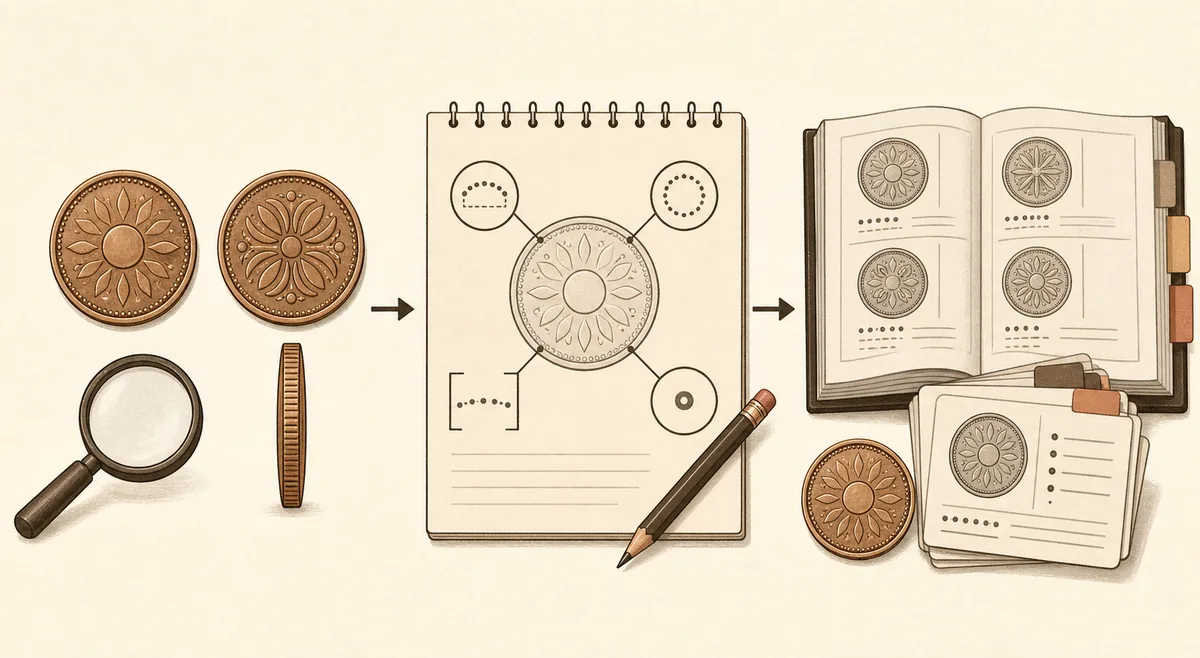
A careful foreign coin identification is a sequence: read the script, record numerals and symbols, photograph both sides and the edge, keep more than one candidate, and verify the complete design in a trusted source. This method works for inherited collections, travel finds, mixed foreign lots, and coins whose lettering is unfamiliar because it makes missing evidence visible.
Use the Coin Identifier as a browser-based first step, then keep the likely match beside your own notes and catalog comparison. When authenticity, rarity, condition, or value matters, stop treating a photo result as a conclusion and ask a qualified specialist to inspect the coin.